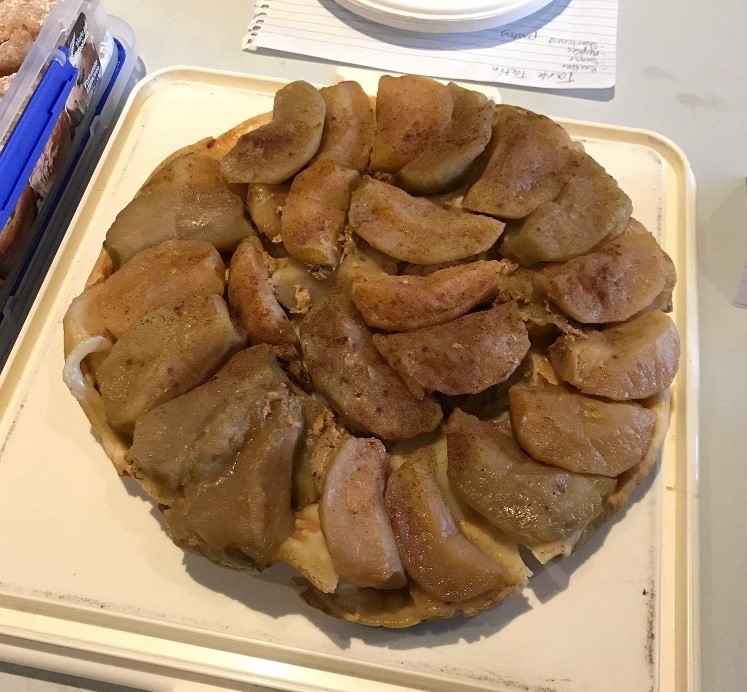
For the food fair, I decided to conquer the famous Tarte Tatin from the Loire Valley region, due to its seemingly simple recipe and fascinating origin. The tart was named after the Tatin sisters, Stéphanie and Caroline. Many claim that it originated when Stéphanie, working at the Hotel Tatin, left the apples to stew for a little too long and upon realising they had caramelised, decided to lay pastry over them and bake it in the oven as is, later flipping it over onto a plate, creating the Tarte Tatin we know today. Others claim that Stéphanie just accidentally placed the tart the wrong way in the oven, but both stories agree on the fact that upon realising the popularity of the dessert amongst the guests, the tart quickly became the hotel’s signature dish, and overtime, a dish famous all around the world. When I started making it, I quickly realised that caramel was not my strong point and suddenly began to rethink my choices. However, once the caramel was done everything worked slightly more to plan, with the pastry creating a nice even tart over the successfully stewed apples. I presented it in the traditional manner, with a dusting of cinnamon over the top, and although there were many hurdles along the way and the dish would ideally be served warm, I was happy with the overall product and the accompanying presentation. After all my hard work I was very pleased to hear others enjoying the tart, and to my great delight it was appreciated by many. Although cooking may not be my forte, making the Tarte Tatin was a worthwhile journey through a small part of France’s rich culinary history.
Haute Cuisine – an exploration of traditional French cooking

Watching Haute Cuisine, I was taken back to my days in France, marked by a nationally shared passion for their esteemed cuisine. The film highlighted this passion and focused not on the mass-produced or modern, Michelin star menus, but rather on the intimate love of cooking traditional dishes. Haute Cuisine focused on the concept of authenticity and reminded me of the writings of Guy Grossi, where he introduced food as a connection to family and tradition, much like the experiences of Hortense and her simple, homestyle recipes, much loved by the president due to the memories they evoked. Similarly, there is an emphasis on the appreciation of regional identity, with Hortense expanding her menu to specific regional produce, exclaiming “I like food to come from somewhere”; a sentiment shared by the likes of many French chefs and writers, including the famous Pampille. This was undoubtedly a foodie film, with a narrative that explores themes of tradition and regional identity in a way that is unparalleled with anything other than food, that is, food being wholly central to the plot. The concepts of gender and class are also explored, with Hortense being the first female chef for the president and therefore experiencing sexism and sexualisation not experienced by the male chefs, as well as a change away from the aristocratic cuisine to that of a simpler style. Additionally, with the theme of my blog being the migration of food, I found the story of cooking in Antarctica an interesting one that highlighted the reach and power of French cuisine. Although many kilometres away from home, Hortense still incorporates local French recipes and produce, and this minimal but important narrative truly encapsulates the culinary nationalism that defines France.
The simple but classic Risi e Bisi
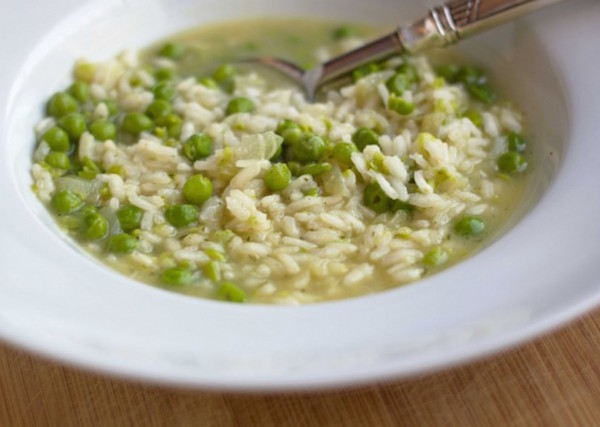
For my second regional dish I decided I would look at Italy and in particular risi e bisi, of the Veneto region. The dish combines rice and peas into a first course that is sometimes described as halfway between a risotto and soup. It has royal origins, served in the days of the Venetian Republic, however, it is created using the simple ingredients of peas and rice that were accessible also to the poor, creating a regional dish enjoyed by all that’s able to express the identity and history of the people. This is emblematic of the top-down approach discussed in lectures, but one that is made affective due to the availability of produce for everyone. Some have claimed that the dish shouldn’t be ordered outside Veneto, where the rice crops are plentiful and valued, which offers a connection to place that is emphasised in Ferguson’s Culinary Nationalism which discusses the concept that food is tied to a particular area. Traditionally, the dish is served in spring, due to the timing of the pea harvest, yet, overtime this seasonal barrier was reduced by the increased availability of produce all-year round. This entrée still remains an important identity marker for many Venetians and during the Italian unification was even consumed with strawberries to show the colours of the Italian flag (red, green and white). It quickly travelled to many eastern Adriatic cities, Greece, Turkey and Lebanon, where it is still featured in many restaurants; and with the rise of globalisation it can now be enjoyed almost anywhere. This has created adaptations of the dish, including the shift in seasonality as well as the transition into a main meal in some locations, reflecting the innovation that coincides with migration.
The popular and authentic Lygon Street
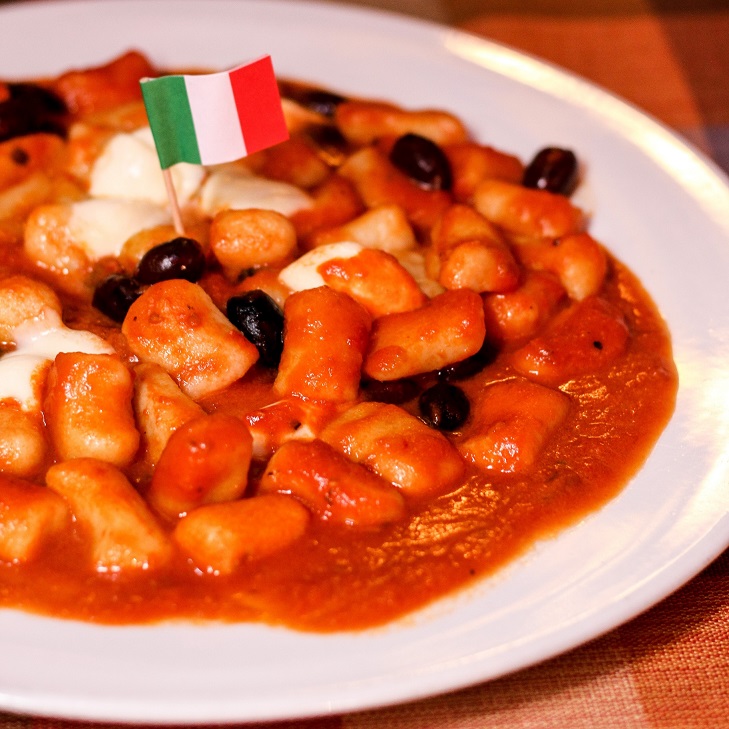
Lygon St is often described as the ‘Little Italy of Melbourne’, with a warm and traditional atmosphere. Upon arrival, your eyes are instantly drawn to the gorgeous two-story restaurants that line the street; a stark contrast to the modern skyscrapers filling the CBD, just minutes away. The cuisine that calls this street home is predominantly dominated by the food of first- or second-generation Italian migrants, many of whom arrived in the 1950s after the war, their migration allowing for the spread of Italian cuisine and integration into Australian culture. I was quickly attracted to the foodscape around me by the staff ushering customers in, the Italian music surrounding us and the smell of rich sauces wafting through the air. Using my new knowledge on the subject, walking past each establishment I quickly came to notice the emphasis placed on authenticity, not only as a means of expressing national identity, but also as a means of branding. One could quickly tell that we weren’t just being sold food, but also the authentic Italian experience in a familiar environment. Although I don’t have a strong cultural connection to food, eating a hearty gnocchi with a group of new friends brought me back to my days of travel and feelings of nostalgia from memories dominated by food. When I was 15, I stayed with a family in France and despite significant language barriers, the entire household was brought together at each mealtime, with food acting as a means of not only expressing their French identity, but also their connection to family and friends, making it arguably the most powerful social tool of all, a concept that is very evident and valued in our given foodscape.
The history and travel of the acclaimed Bouillabaisse
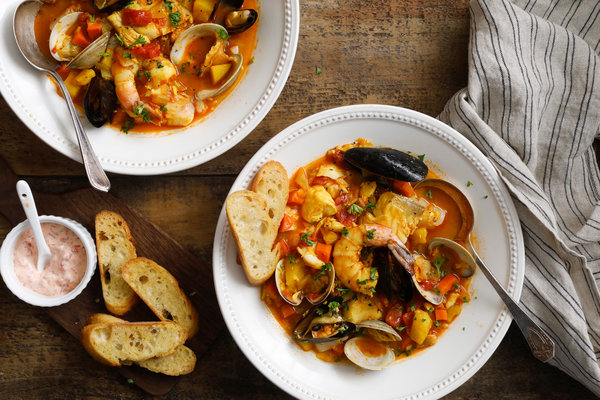
Exploring the idea of regional identity expressed through food, it is hard to look past the famous French bouillabaisse. Originating in the city of Marseille, in the Provence region, the renowned fish stew started as a poor-man’s meal made by the local fishermen, using the bony rockfish they were unable to sell. It usually consists of at least three types of fish, as well as a broth served with a rouille and croutons. Always eaten hot, this dinner dish is traditionally served in two separate dishes, one containing the fish and one the broth, and then combined onto one plate for consumption. This dish truly reflects the region’s identity as a fishermen’s port coming from humble beginnings and highlights the rich history of the people who once lived in the area, making do with what they had to create a hearty stew to feed the masses. This regional pride is still reflected today with the appearance of bouillabaisse on esteemed menus all over Provence and the connection to history that it creates. This dish highlights the concept of authenticity and the conflict between tradition and innovation, created with the introduction of new ingredients such as shellfish; a concept that is highlighted in our studies and more specifically, Ferguson’s Culinary Nationalism and Steinberger’s look at the adaptation of French cuisine in order to keep up with the ever-changing modern climate. Through the lens of this blog’s theme, one can see that bouillabaisse has travelled out of France through colonialism and migration, due to its simplicity and reliance on produce that is readily available in many of France’s colonies. This is further spread with the introduction of globalisation and can now be found at restaurants all around the world.
 A Taste of Migration